
Today’s literary choice is perfectly in step with current trends, but has yet to catch on.
Thanks to Amanda for suggesting our Baby Name of the Day: Waverly.
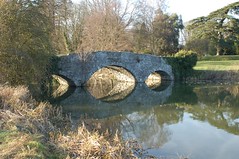
Waverly sounds like a surname, but first appears in the historical record as the name of an abbey, constructed in 1128. It lasted into the 1500s, when the combined forces of flooding from the nearby River Wey and Henry VIII’s dissolution of the monasteries forced it into ruin. Waverley Abbey’s name is tricky to trace, too. I’d thought it might relate to the nearby River Wey, but that’s not clear.
A few references link Waverly to aspens, and that tracks with the -ley ending, which usually signified a clearing, meadow, or field. Nearly every reference talks about “quaking aspens,” and our word waver traces back to the Old English wæfre – restless. So Waverly picks up yet another appealing aspect – a nature name vibe.
In 1814, Sir Walter Scott scored a smash hit with his novel Waverley. His hero is called Edward Waverley, a well-born soldier sent to Scotland during the Jacobite Rebellion in 1745. (This makes Waverly one of the first historical novels.) Edward falls in love with Flora, the sister of a Scottish chieftain. This brings us back to the trees: he describes her harp playing as “the soft sigh of the evening breeze in the rustling leaves of an aspen.”
There’s much intrigue, but no happy ending. Despite Flora’s chieftain brother Fergus springing Edward from jail, Edward marries the sensible Rose.
Some link the novel’s name to Waverly Abbey, but that might just be coincidence. Likewise, the 64 baby girls given the name in 2009 according to Nancy are probably not linked to the novel.
What could inspire parents to choose Waverly?
- She’s a popular place name throughout the English-speaking world. She appeared on the New York City street names blog post at Nameberry, but you can find this name on the map from Alabama to Wisconsin;
- Amy Tan’s 1989 Joy Luck Club included a character named Waverly, named for the street where her family lived in San Francisco;
- The Princess Bride was a 1973 novel, a 1987 film, and an undeniable cult classic. Later editions of the novel contain a brief epilogue and hint at a sequel, all about the daughter of Westley and Princess Buttercup. Her name? Waverly;
- If you’ve seen The Disney Channel in recent years, you might’ve caught The Wizards of Waverly Place, a successful comedy about a trio of wizards-in-training who have to keep their powers secret. The show is set in New York City’s Greenwich Village, where there really is a Waverly Place, which was named after the novel – which takes us back to the beginning.
In the nineteenth and early twentieth centuries, Waverly occasionally surfaced as a boy’s name. But today, she sounds like a likely successor to Delaney – and undeniably feminine. And while her name links to trees, her first syllable might remind parents of the beach. If girls can be called Ocean and Sea, why not Waverly?

My grandparents lived on Waverly so I love it for that reason!
I’ve never heard of the brand Waverly. When I first got pregnant there was a woman on one of my pregnancy boards with a daughter names Waverly. She said they get tons of compliments on it. I like it. It’s fun and unusual. I personally don’t get how it’s WASPy at all.
I’m going to be a rebel and go towards the pro-Waverly camp. It’s probably because in England there aren’t any brands called Waverly and I don’t mind a bit of preppiness.
Also, Flora and Fergus is a great pair.
I think preppy is the better word.
The ultimate proof? There’s a Lilly Pulitzer style of shirt called Waverly, discontinued but still available on eBay: https://cgi.ebay.com/ws/eBayISAPI.dll?ViewItem&item=290494556930&hlp=false&rvr_id=189022737928&crlp=1_263602_304652&UA=M*F%3F&GUID=bf0b107312c0a06c1c467386fff0d29a&itemid=290494556930&ff4=263602_304652
I’ve heard others say that this is a bad moment for baby names that signal affluence – stereotypical New England Boarding School names, like Carter and Brooks – while “working” names, like Miller, are on the upswing. Time to pack away our Nantucket reds and take out the Carhartt – as if any of us chooses our backgrounds. It’s the kind of comment that makes me think analyzing baby name trends is silly. (Though I do every day of my life.)
I do think Waverly’s sound fits in, but there could be something to the idea that her moment might have passed – without having ever arrived!
I agree that preppy is the better word, for it doesn’t bring ethnicity or religion into the discussion.
Ok. I have to ask, What’s wrong with WASPy names? Please be careful about how you phrase things.
There is nothing wrong with waspy names, but I dislike it when they seem sort of faux-pedigreed. Waverly seems like it is intentionally TRYING to sound preppy, at least to my ears.
I know a Waverly. She’s well-respected in my profession. I don’t know where her name originated. I think, as was said in the post, it’s a nice companion to the Delaney’s out there.
Add me to the “dislike” camp! When I open my pantry, there’s Waverly, on the cracker/cookie shelf.
Feels stiff & preppy. I might not have a problem with it as a boys middle name with something sort of classic: Edward, George, Clarence but I’ve heard this one suggested before as a girls name where it strikes me as far, far too Waspy & stuffy for comfort. Waverly gets a blergh and :thumbsdown: from me.
^trying TOO hard *blush*
I agree with the pp. There is something about Waverly that sounds so “branded” to me. Waverly crackers, Waverly fabrics…it would be the perfect name for a new subdivision of McMansions. Waverly Trace. It’s just seems uber-waspy and over-polished and trying-to-hard to me.
All I can think of is fabric! Having been a Waverly fabrics fan in a past life, I’m gonna have to say “no” to the name.
Huh. I’m taking a sewing class now, and the instructor HAS mentioned Waverly more than once. Still, I completely missed the reference.
What’s interesting is that Waverly was apparently a deliberately chosen name, not the surname or hometown of anyone involved with launching the line in the 1920s. And there was something aspirational about the line, so … that’s interesting.